 Aakash Trivedi July 23, 2023
Residual Life Assessment of Old Process Plants
The Residual Life assessment is general practice for predicting the remaining operating life of plant equipment which are in service for many years. This is the issue faced by continuous process industries, steel plants, cement plants, power plants etc. These types of studies are in general executed from id life to end life of the facilities under study.
The problem is for the plants and facilities which have been in service for 15 to 25 years or more. The accurate estimation of residual life of in components of equipment and system can be great asset when planning the preventive maintenance.
It is prudent to precisely assess the condition of the plant, equipments for arriving at life extension options, achieve operational reliability and plant efficiency to maintain / reduce foot print. Many times, Residual Life Assessment (RLA) is understood as service equipment / plant component metallurgical analysis by agencies / consultants in overhauling / repair sector.
The detailed metallurgical analysis based RLA reports provide a recommendation for further use without providing any quantitative basis for life extension, plant efficiency and repairs / replacement / maintenance required at predicted schedule timing. In the current economic and industrial conditions, many organizations cannot afford to replace existing plants or major components and must find a way to safely extend their operating life including optimized operational regime and facility performance. These organizations make hard efforts for accurate and reliable prediction of facility residual life, rearrange most optimized operational envelope and further maintenance frequencies / intervals. This is must in order to safely operate the facility, plan for repair / replacement of component and achieve economic operation. These support measures can help reach plant worthiness and usefulness by
- establishing a firm and sound basis for operational life extension
- eliminating / reducing unscheduled outages caused by in-service failures resulting in high costs
- eliminating unnecessary replacements
The proper implementation of residual-life prediction methodology allows the continued use of plants that might otherwise be decommissioned / retired from service unnecessarily. This can result in net savings to many organizations reducing burden on higher capital investment momentarily.
Understanding the Residual Life Assessment (RLA)
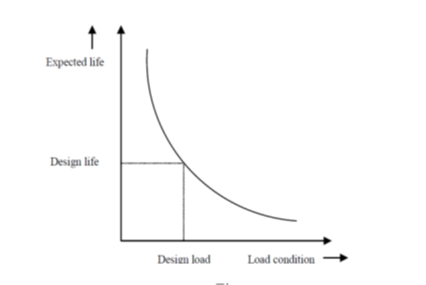
Any equipment is designed to work under certain conditions and has certain expected life. If these equipments operation in harsher conditions impacts their useful life adversely. The intent is to estimate maximum expected lifetime to derive estimated residual life of facility along with operating conditions of the plant and maintenance schedule. The expected lifetime is a function of the operating conditions. The residual lifetime can be defined as the difference between the expected lifetime and the actual age. For general plant equipments, the relationship between expected life and load conditions can be described as picture below.
Execution Methodology:
The plant equipments are normally exposed to aging and wear & tear. Many times some random failures occur due to causes which are external to the system. The equipment is repaired and brought back to working condition.
The record of the operating conditions under which the equipment has worked over the past period is very important for life estimation and extension study. This forms the basis including the maintenance records, major spares consumed, repairs done in past and are very helpful in understanding over all facility condition. Some of the points for executing RLA study are listed.
- Study of past plant performance data and review of O&M records e.g. loading conditions, number of tripping failures, major repairs / replacements etc.
- Assessment of present condition of the equipment, efficiency and operating parameters.
- Assessment of remaining life of various equipment parts by conducting residual life assessment (RLA) study including non-destructive tests, metallurgy tests / metallography etc.
- Identification of components requiring replacements, repairs, up-gradations / retrofitting.
- Preparation of Renovation & Modernization / Life Extension scheme covering the facility scope.
In general it has been observed from past experiences that, majority parts / components mostly exposed to high pressure / high temperature / cyclic operation stress / strain are prone to different type of damage mechanisms including creep damage, thermal fatigue, degradation, decarburization, oxidation, erosion etc.
The details of various non-destructive tests and damage mechanism we will discuss in our next writeup.
For more information, visit us at
